Reading Olive Oil Lab Results Like a Sommelier
We believe in full transparency. Each year, we send our olive oil to a certified laboratory in Italy, not because the law requires it, but because we want to know exactly what we’ve created.
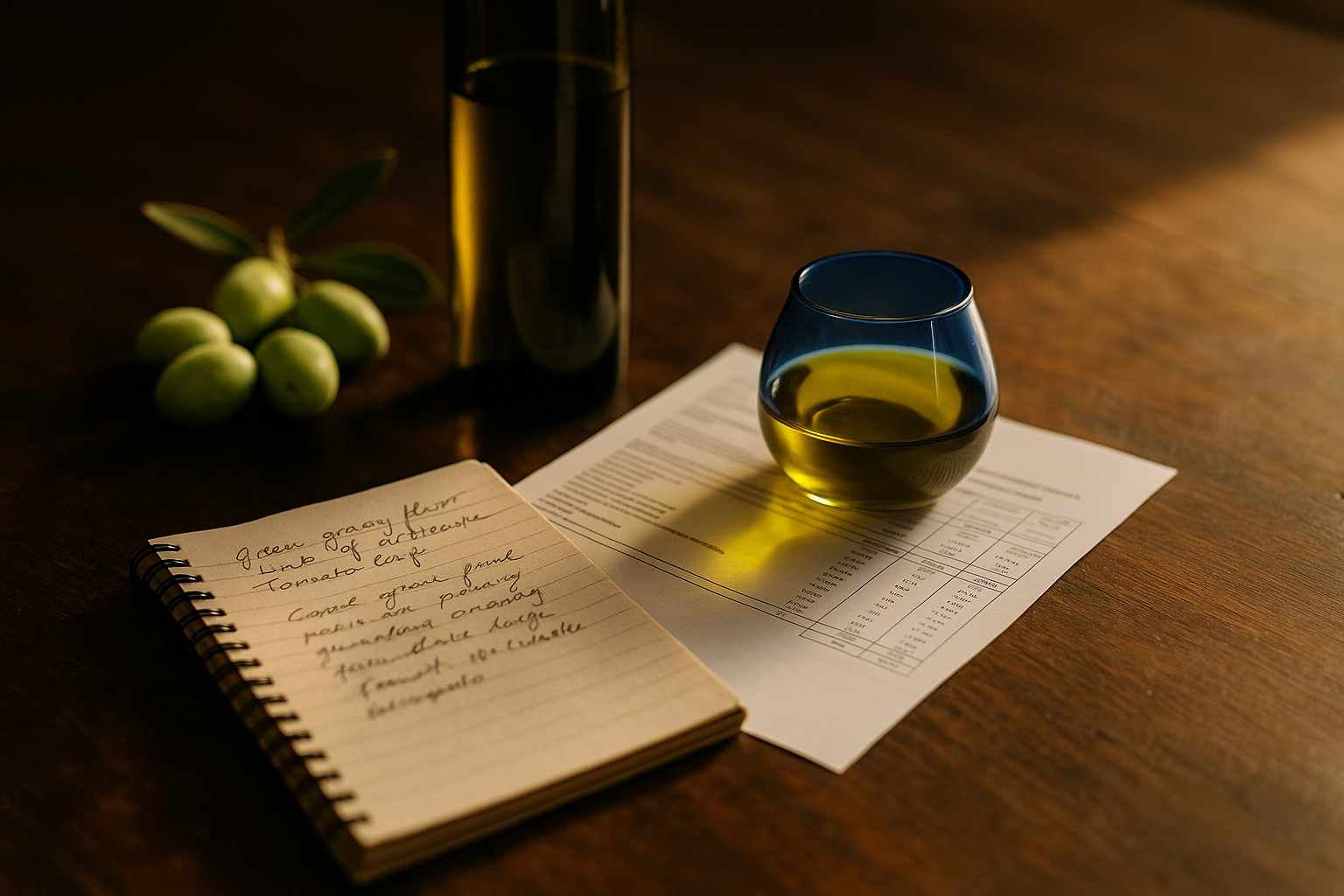
The report we receive is dense with numbers: acidity, peroxides, polyphenols, delta K, and more. For the average consumer, it reads like chemistry.
For a sommelier, it reads like a fingerprint.
Here is how to interpret that fingerprint.
Acidity
Measured as oleic acid (%), this is not about taste. It reflects the health of the olives at pressing.
The lower the number, the better.
Extra virgin olive oil must be under 0.8%.
At Bregu Lofatave, we typically fall around 0.2 to 0.3%, a sign of clean fruit, immediate pressing, and careful handling.
Peroxide Value
This measures oxidation, how much the oil has already aged or broken down.
The legal limit is 20. We aim for 7 to 10, often lower.
A low peroxide value suggests freshness and proper storage before bottling.
Polyphenols
These are natural antioxidants that bring both bitterness and health benefits.
There is no legal minimum, but experts agree that anything over 300 mg/kg is considered high.
Our oils, especially in strong harvest years, have reached 500 to 700 mg/kg.
This is where the oil gets its complexity, green tomato, artichoke, fresh-cut grass, and that peppery bite at the back of your throat.
Delta K (ΔK)
This one is often ignored by non-experts, but it tells an important story.
Delta K measures whether the oil has been tampered with or contains refined blends.
A true extra virgin oil has delta K values well below the legal threshold.
At Bregu Lofatave, we aim for zero. We have nothing to hide.
Why We Share This
We don’t publish these numbers to show off. We share them to invite trust.
A sommelier may read these results and know exactly what to expect. A careful consumer may not understand every metric, but they will understand the intention: clarity, discipline, and respect for the product.
And that, we believe, is the true mark of quality.
Because in the end, olive oil should not only taste good.
It should stand up to scrutiny. And it should pass with pride.