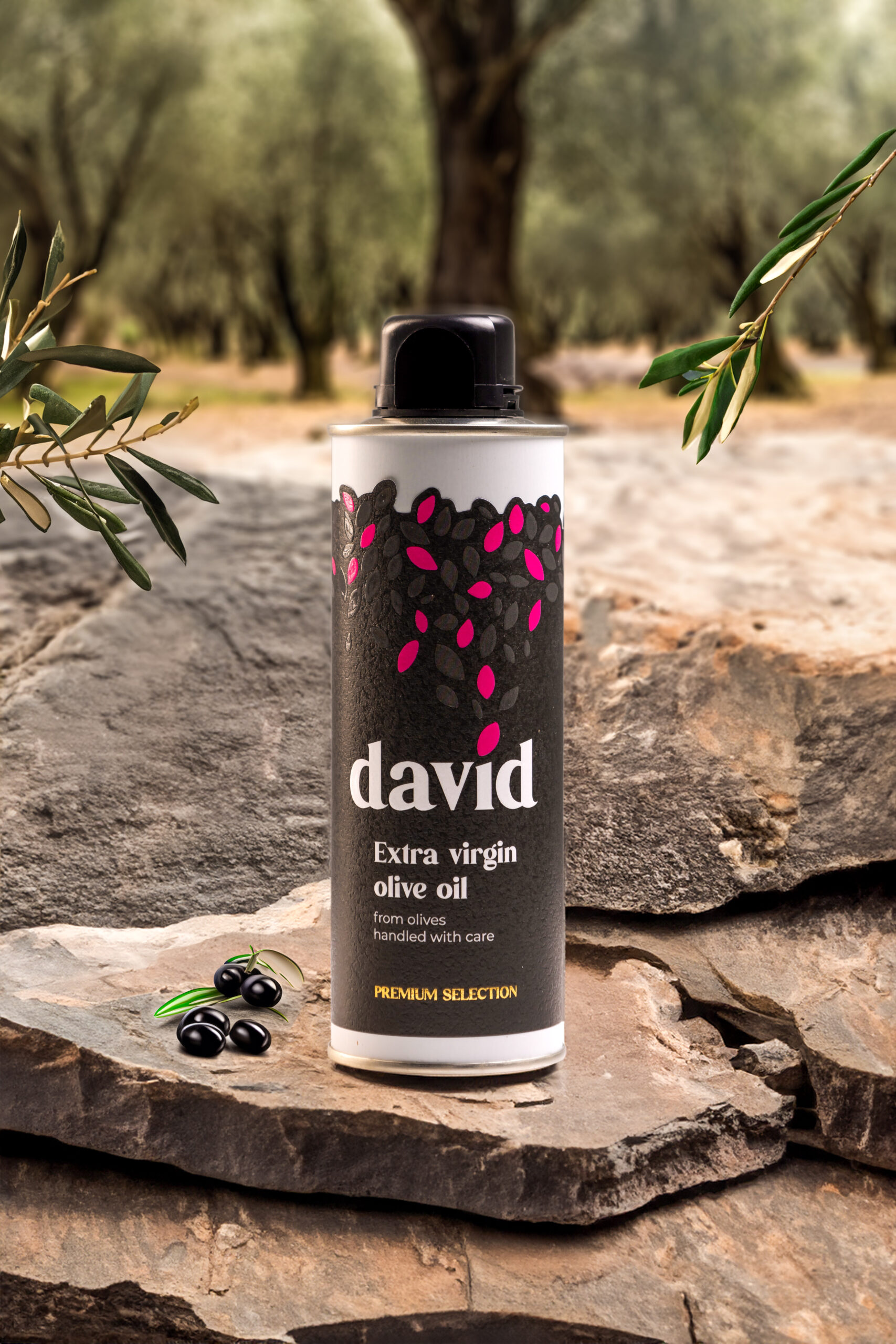
A label can hold a lot of things.
Harvest date. Olive variety. Lot number. Origin. Lab results. Certification seals.
But the most important part of a bottle of olive oil doesn’t fit on the label.
It lives in the choices no one sees.
Our bottle doesn’t tell you how we debated the exact day to start harvesting.
How we waited through wind and rain for the olives to reach that perfect moment between green and ripe.
How we harvested at dawn to avoid heat.
How we stopped the mill between batches to wash every surface, even if no one asked us to.
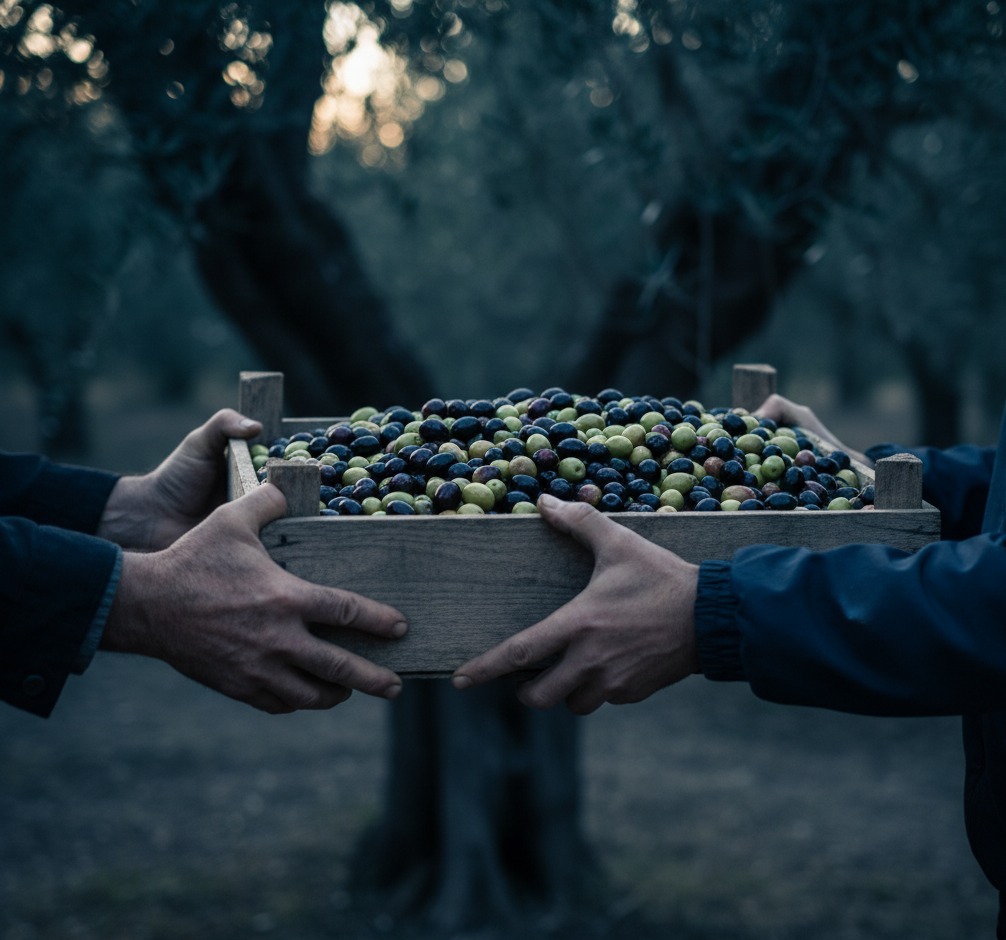
It doesn’t mention the friends who helped carry crates across muddy terrain.
Or the weeks spent climbing into the mountains to collect organic manure by hand.
It doesn’t list the calls made to agronomists. The late-night field checks. The tension when the weather shifts. The hours spent filtering and tasting and worrying.
It doesn’t tell you how many olives we didn’t bottle.
How we discarded whole lots that didn’t meet our internal standards, fruit that might have passed in another place, under another name.
And it doesn’t speak of pride.
The quiet kind that comes from doing something the long way, the hard way, the right way.
Nor does it mention the bottles of rakija we passed between friends after the day’s work,
The laughter, the tired hands, the quiet arguments about whether the oil that year was better than the last.
Those moments are not traceable. But they’re in the bottle too.
We write “Extra Virgin” on the label because the law requires it.
But what’s in the bottle is more than a legal category.
It’s a year of labor, a place with a name, and a way of working that we will not change.
We don’t expect you to know all this.
But maybe, when you open a bottle of Bregu Lofatave, you’ll taste something you can’t quite describe, something clean, bold, and quietly exact.
That’s what the label doesn’t say.
But the oil remembers.