There’s a moment we love at Bregu Lofatave.
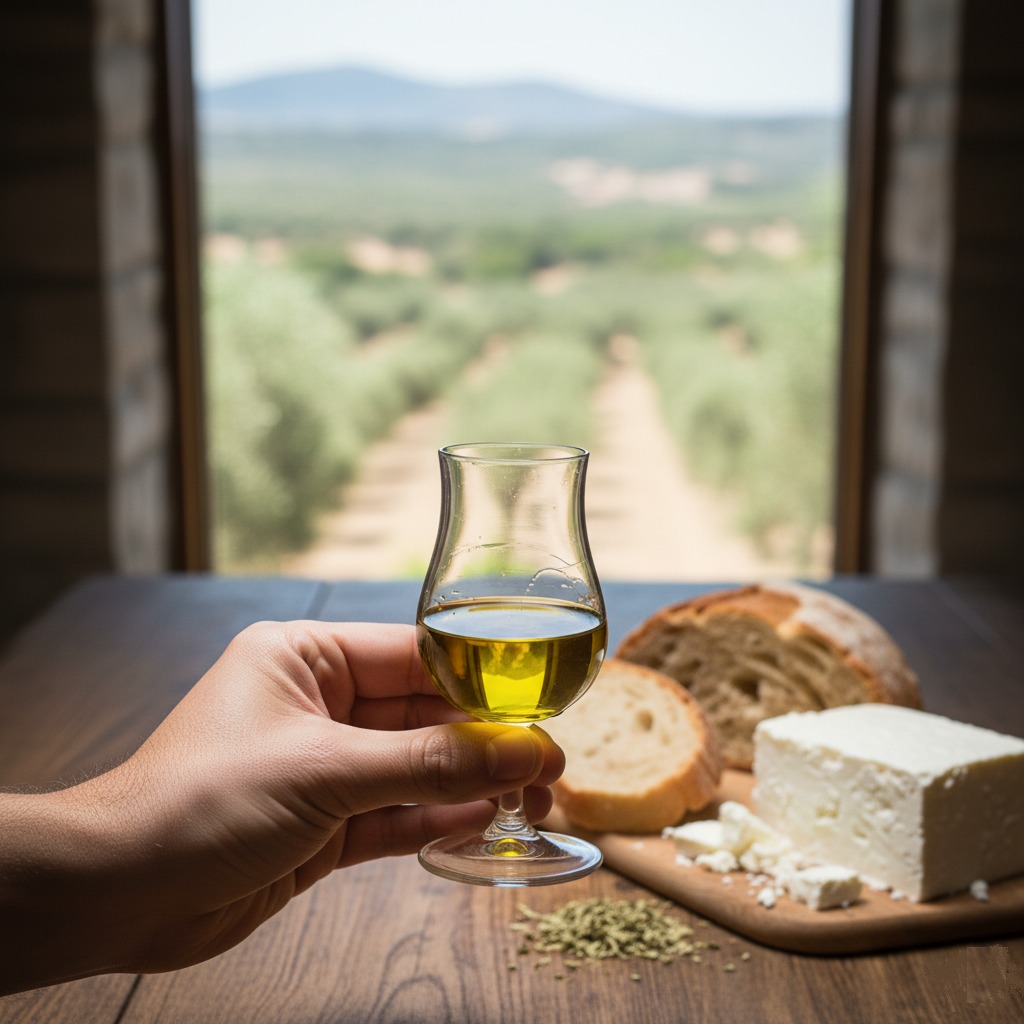
It happens just after pressing, in the cold cellar, with a small glass of our new oil in hand. The room is still. The oil is warm from the mill. And someone always closes their eyes.
This is how tasting begins, not with technique, but with attention.
You don’t need special tools or certifications to taste well. You just need to be present.
Still, if you’d like to taste like the professionals do, here’s how we do it.
1. Warm the Glass
Pour a small amount of olive oil into a tasting glass or small cup.
Cover it with your palm, and gently warm the bottom with your hand. This helps release the aromas.
2. Smell Before You Taste
Remove your hand and take a deep, focused breath.
What do you notice?
Green tomato? Cut grass? Artichoke? Apple? Almond? Herbs?
Is it vibrant, soft, sharp, or dull?
If it smells like nothing, or like wax or vinegar, it’s already failed the test.
3. Taste with the Whole Mouth
Take a small sip and let it roll over your tongue.
Professional tasters often suck in air through their teeth to spray the oil across the palate, but don’t worry if that feels strange.
Focus instead on texture. On bitterness. On balance.
Does it feel clean or heavy?
Does it speak or stay quiet?
4. The Finish
The finish is what separates an average oil from a great one.
A slight bitterness on the tongue. A peppery tickle at the back of the throat.
These are not flaws. They are the fingerprints of polyphenols, signs that the oil is fresh, healthy, and alive.
If the oil makes you cough, smile.
That’s often a good thing.
No Two Oils Speak the Same
Just like wine, every olive oil has its voice.
It is shaped by the variety, the harvest, the soil, the timing, and the hands behind it.
Tasting well isn’t about judgment.
It’s about respect.
So take a piece of bread. Pour a little oil. And take your time.
Because a good oil doesn’t just coat the mouth.
It tells you a story.