We were not born into farming.
We were born into stories. Into the scent of olives and woodsmoke at our grandmother’s table. Into a coastline filled with trees that felt older than memory.
But we needed more than love to make great olive oil. We needed knowledge.
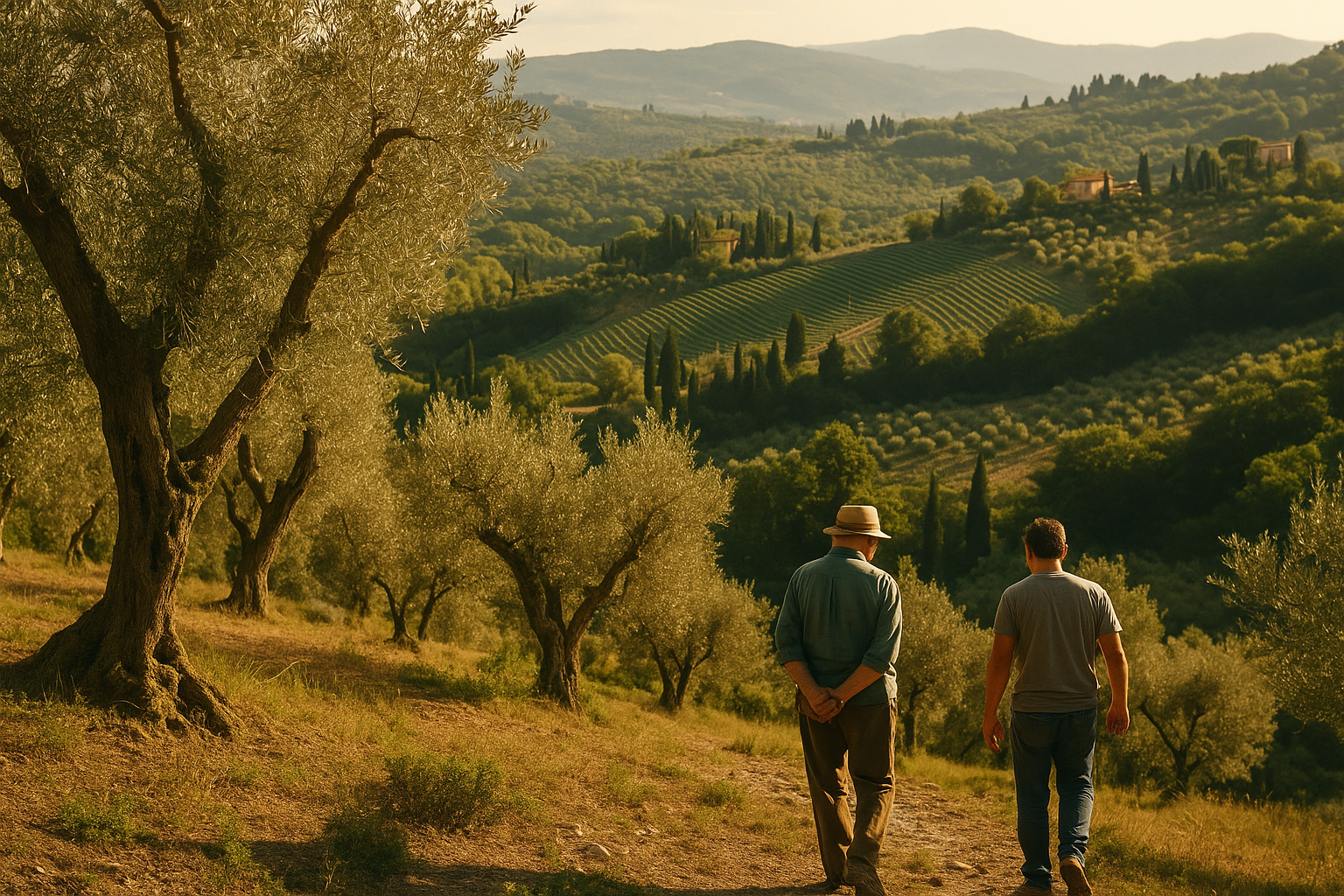
We found it in Tuscany.
There, in the hills of central Italy, we met people who had been walking groves for decades. Luigi. Franco. Men with sun-worn hands and eyes that could read a tree in silence.
They didn’t speak like consultants. They spoke like caretakers.
They taught us how to prune with intention, how to watch the fruit ripen day by day, how to measure maturity not by calendar but by feel.
They taught us how to think in decades, not seasons.
They also taught us humility.
That to make great oil, you must forget yourself and serve the land.
That technology can help, but only if your philosophy is already sound.
That shortcuts don’t just lower quality, they break trust.
We brought all of that home to Albania.
And what we found was this: the land was ready. The soil remembered. The trees listened.
Albania gave us back more than we expected. It gave us the raw beauty of unspoiled slopes. It gave us wild herbs in the wind, pollinators untouched by chemicals, and olive varieties that have lived through wars and droughts and time itself.
Tuscany shaped our thinking.
But Albania gave it a voice.
Today, when we walk through our grove in Risili, we carry those lessons like tools in our pocket.
We prune like Luigi taught us. We press like Franco insisted. But the decisions, the timing, the spacing, the patience, come from here, from this land, from what we’ve learned by living with it.
Because great olive oil is not a formula.
It is a relationship. And relationships, like trees, take time to grow.